
$35.00
| Received | Date Released | Vendor | Accession # | Peptide Name | Lot # | Appearance | Test Ordered | Net Peptide | Mass ID | Purity |
|---|---|---|---|---|---|---|---|---|---|---|
| 7/24/2026 | 7/28/2026 | ArgentBiolabs | 2607240117 | MOTS-c 10mg | Black Cap | White Lyophilized Powder | Purity/Net | 10.70 mg | MOTS-C | 99.81% |
| 7/24/2026 | 7/28/2026 | ArgentBiolabs | 2607240118 | Retatrutide 10mg | Black Cap | White Lyophilized Powder | Purity/Net | 18.36 mg | GLP RT | 99.82% |
| 7/24/2026 | 7/28/2026 | ArgentBiolabs | 2607240119 | BPC-157 10mg | Black Cap | White Lyophilized Powder | Purity/Net | 9.09 mg | BPC-157 | 99.64% |
| 7/24/2026 | 7/28/2026 | ArgentBiolabs | 2607240120 | Tesamorelin 5mg | Black Cap | White Lyophilized Powder | Purity/Net | 9.13 mg | Tesamorelin | 99.57% |
| 7/24/2026 | 7/28/2026 | ArgentBiolabs | 2607240121 | CJC-1295/Ipamorelin 5mg/5mg | Black Cap | White Lyophilized Powder | Purity/Net | Ipamorelin – 4.06 mg CJC-1295 – 4.34 mg | Ipamorelin/CJC-1295 | 99.83% |
| 7/24/2026 | 7/28/2026 | ArgentBiolabs | 2607240122 | GHK-Cu 50mg | Black Cap | Blue Lyophilized Powder | Purity/Net | 46.13 mg | GHK-Cu | 99.72% |
PRECISION. PURITY. ARGENT.
ELEVATED RESEARCH STANDARDS.
RESEARCH REFINED.
PRECISION. PURITY. ARGENT.
ELEVATED RESEARCH STANDARDS.
RESEARCH REFINED.
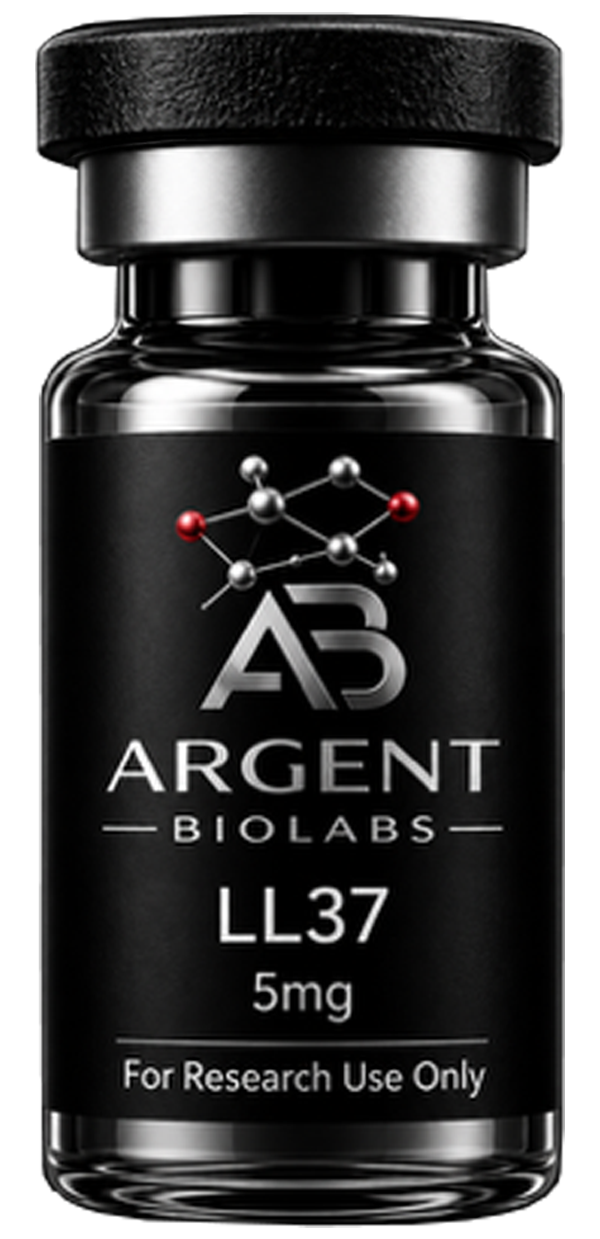
Long before modern labs existed, living things were already making their own molecular defenders. Antimicrobial peptides are short chains of amino acids found across nature, from frogs and insects to plants and people.
LL-37 is the only member of the cathelicidin family identified in humans. It is cut from a larger precursor protein called hCAP18, and its name tells its story: 37 amino acids long, beginning with two leucines (L-L).
Researchers study LL-37 in controlled laboratory models to better understand how innate defense molecules interact with cell membranes.
#ScienceSpotlight #LL37 #PeptideResearch #Biochemistry
$100.00
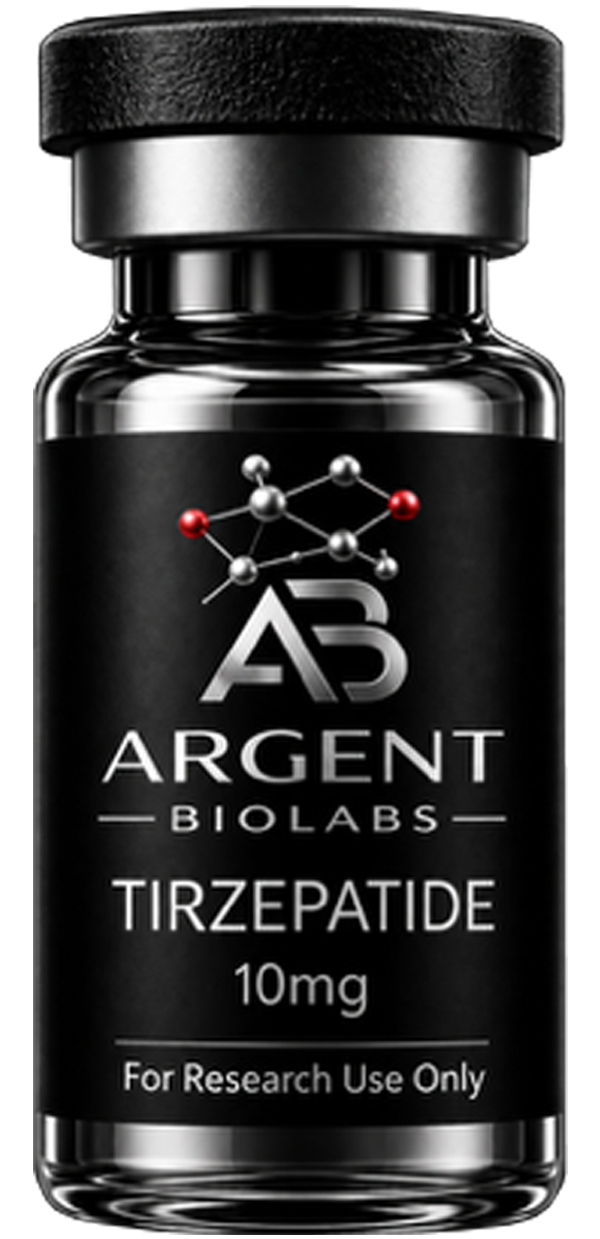
When nutrients reach the gut, the body releases messenger hormones called incretins. The two best known are GIP (glucose-dependent insulinotropic polypeptide) and GLP-1 (glucagon-like peptide-1).
GIP was identified in the 1970s and GLP-1 in the 1980s, and both act on their own receptors. Tirzepatide is a 39-amino-acid synthetic peptide designed to interact with both GIP and GLP-1 receptors, making it a “dual agonist.”
That dual-receptor design makes it a subject of laboratory study in metabolic research models.
#ScienceSpotlight #Tirzepatide #Incretins #MetabolicResearch
$100.00

Neurons communicate with more than electrical signals. They also release neuropeptides, short protein chains that act as chemical messengers across the nervous system.
Semax is a synthetic seven-amino-acid peptide developed in the 1980s at the Institute of Molecular Genetics in Moscow. It is based on a fragment of ACTH (4–10), with a Pro-Gly-Pro sequence added to the end, a modification researchers use to make peptides more stable.
Semax is studied in laboratory models of neuropeptide signaling.
#ScienceSpotlight #Semax #Neuropeptides #Neuroscience
$65.00
