Long before modern labs existed, living things were already making their own molecular defenders. Antimicrobial peptides are short chains of amino acids found across nature, from frogs and insects to plants and people.
LL-37 is the only member of the cathelicidin family identified in humans. It is cut from a larger precursor protein called hCAP18, and its name tells its story: 37 amino acids long, beginning with two leucines (L-L).
Researchers study LL-37 in controlled laboratory models to better understand how innate defense molecules interact with cell membranes.
#ScienceSpotlight #LL37 #PeptideResearch #Biochemistry
Tucked behind the breastbone sits the thymus, a small organ with a big job: it is where T cells mature. For decades scientists wondered what molecules the thymus produced.
In the 1970s, Dr. Allan Goldstein’s research group isolated Thymosin Alpha-1 from a thymus extract known as “thymosin fraction 5.” It is a 28-amino-acid peptide.
Today, Thymosin Alpha-1 remains a subject of laboratory research into immune signaling and cellular responses.
#ScienceSpotlight #ThymosinAlpha1 #Immunology #PeptideResearch
When nutrients reach the gut, the body releases messenger hormones called incretins. The two best known are GIP (glucose-dependent insulinotropic polypeptide) and GLP-1 (glucagon-like peptide-1).
GIP was identified in the 1970s and GLP-1 in the 1980s, and both act on their own receptors. Tirzepatide is a 39-amino-acid synthetic peptide designed to interact with both GIP and GLP-1 receptors, making it a “dual agonist.”
That dual-receptor design makes it a subject of laboratory study in metabolic research models.
#ScienceSpotlight #Tirzepatide #Incretins #MetabolicResearch
Some research questions involve more than one molecule at a time. Peptide blends combine multiple peptides into a single lyophilized (freeze-dried) vial, so researchers can work with a defined combination from one source.
KLOW is an 80mg research blend. Every lot’s exact composition and purity is documented on its Certificate of Analysis, so researchers know exactly what is in each vial.
Lyophilization removes water at low temperature and pressure, which helps keep peptides stable during storage and shipping.
#ScienceSpotlight #KLOW #PeptideBlends #LabResearch
Neurons communicate with more than electrical signals. They also release neuropeptides, short protein chains that act as chemical messengers across the nervous system.
Semax is a synthetic seven-amino-acid peptide developed in the 1980s at the Institute of Molecular Genetics in Moscow. It is based on a fragment of ACTH (4–10), with a Pro-Gly-Pro sequence added to the end, a modification researchers use to make peptides more stable.
Semax is studied in laboratory models of neuropeptide signaling.
#ScienceSpotlight #Semax #Neuropeptides #Neuroscience
In 1970, researchers at Tufts University described tuftsin, a naturally occurring four-amino-acid peptide (Thr-Lys-Pro-Arg), and named it after their school.
Selank was later developed at the Institute of Molecular Genetics of the Russian Academy of Sciences as a synthetic analog of tuftsin. Like Semax, it adds a Pro-Gly-Pro sequence, giving it seven amino acids in total.
Selank is investigated in controlled laboratory models of neuropeptide signaling.
#ScienceSpotlight #Selank #Tuftsin #PeptideResearch
Sometimes the smallest pieces tell the biggest stories. Alpha-MSH (alpha-melanocyte-stimulating hormone) is a 13-amino-acid peptide hormone.
KPV is just its final three amino acids: lysine, proline, and valine. That makes it a tripeptide, one of the simplest peptide structures there is.
Researchers study KPV in laboratory models to explore cellular signaling and pathways related to inflammatory responses.
#ScienceSpotlight #KPV #AlphaMSH #PeptideResearch
Growth hormone release in the body involves more than one signaling pathway. Two key players are the GHRH receptor and the ghrelin receptor (GHS-R1a).
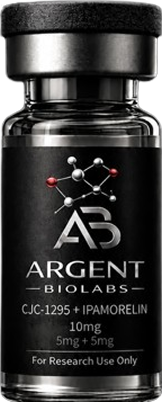
CJC-1295 is a synthetic analog of the first 29 amino acids of growth hormone-releasing hormone (GHRH), originally developed by the Canadian company ConjuChem. Ipamorelin is a five-amino-acid peptide first described in 1998 by researchers at Novo Nordisk, and it targets the ghrelin receptor.
This combination vial (5mg + 5mg) lets researchers study two distinct receptor pathways side by side.
#ScienceSpotlight #CJC1295 #Ipamorelin #PeptideResearch
At the end of every chromosome is a protective cap called a telomere, often compared to the plastic tip on a shoelace. Telomeres shorten as cells divide.
In 2009, Elizabeth Blackburn, Carol Greider, and Jack Szostak won the Nobel Prize in Physiology or Medicine for discovering how telomeres and the enzyme telomerase protect chromosomes.
Epitalon is a synthetic four-amino-acid peptide (Ala-Glu-Asp-Gly) developed by Russian scientist Vladimir Khavinson. It is based on epithalamin, an extract from the pineal gland, and is used in research exploring cellular processes and telomere biology.
#ScienceSpotlight #Epitalon #Telomeres #CellBiology