Peptide Impurity Analysis for Verified Research

Peptide impurity analysis clarifies purity, identity, and batch consistency. Learn what credible HPLC data and a research COA should document for buyers.

Peptide impurity analysis clarifies purity, identity, and batch consistency. Learn what credible HPLC data and a research COA should document for buyers.

Assess the top indicators of reliable peptide suppliers: batch-specific COAs, HPLC purity, identity testing, traceability, and controlled packaging standards.

Independent peptide laboratory testing confirms identity, purity, and traceability, giving research buyers documented confidence for each batch evaluated.

Research compound batch traceability connects each vial to its analytical record, helping laboratories verify identity, purity, handling, and consistency.
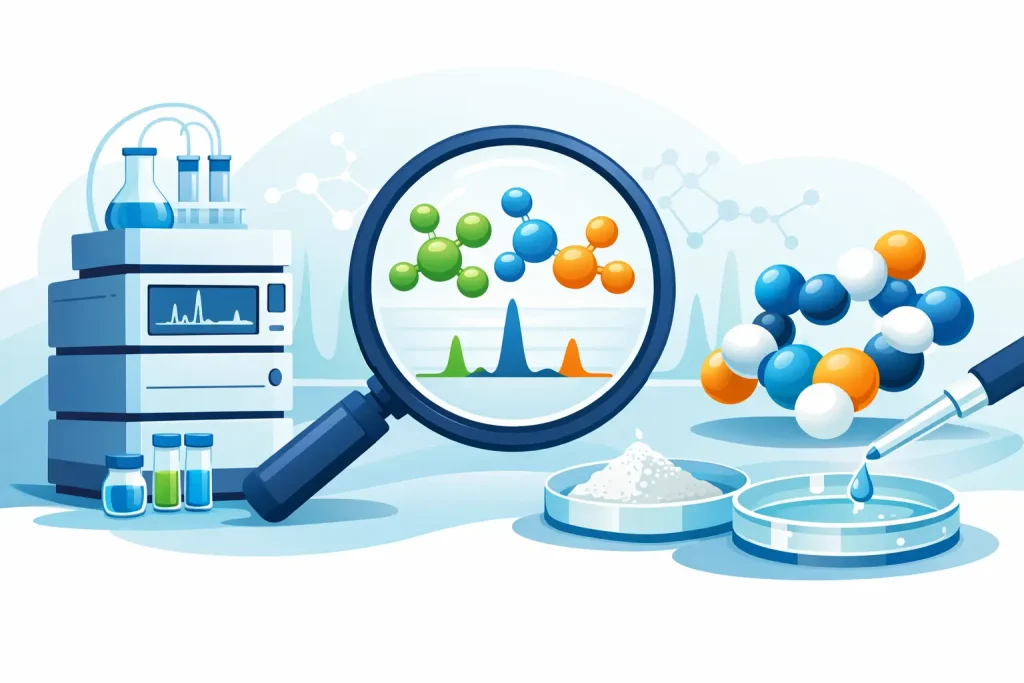
Learn what does HPLC peptide purity mean, how chromatograms and COAs are read, and why purity alone cannot confirm peptide identity or quality in research.
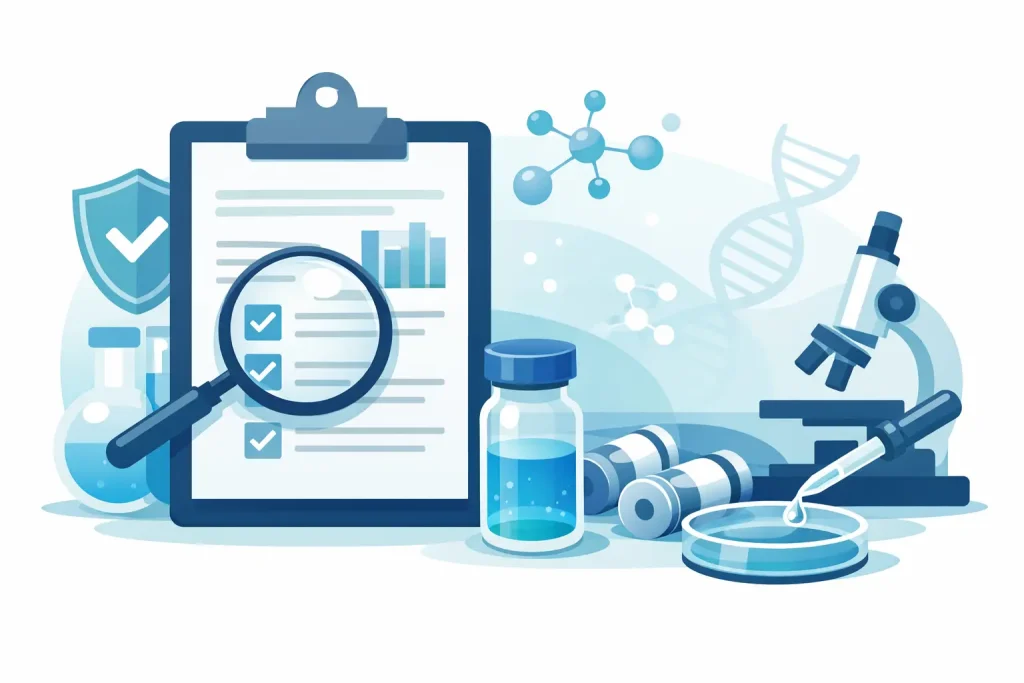
Learn how to verify peptide COA records by matching batch data, identity, purity, methods, and traceability before accepting material for research use.

Liquid SARM concentration testing verifies whether a research solution matches its stated strength, supporting traceability, batch control, and analysis.

MOTS-C mitochondrial metabolism research examines stress signaling, glucose regulation, and the quality controls needed for credible laboratory studies.

GHK-Cu peptide stability research examines pH, temperature, metals, light, and packaging to protect identity, purity, and analytical confidence over time.

Assess Ipamorelin research peptide purity through identity testing, HPLC data, batch-specific COAs, and controlled packaging for laboratory use with care.